Hotter, Drier, Wilder: How to Design a Drought-Resilient Garden in Bristol
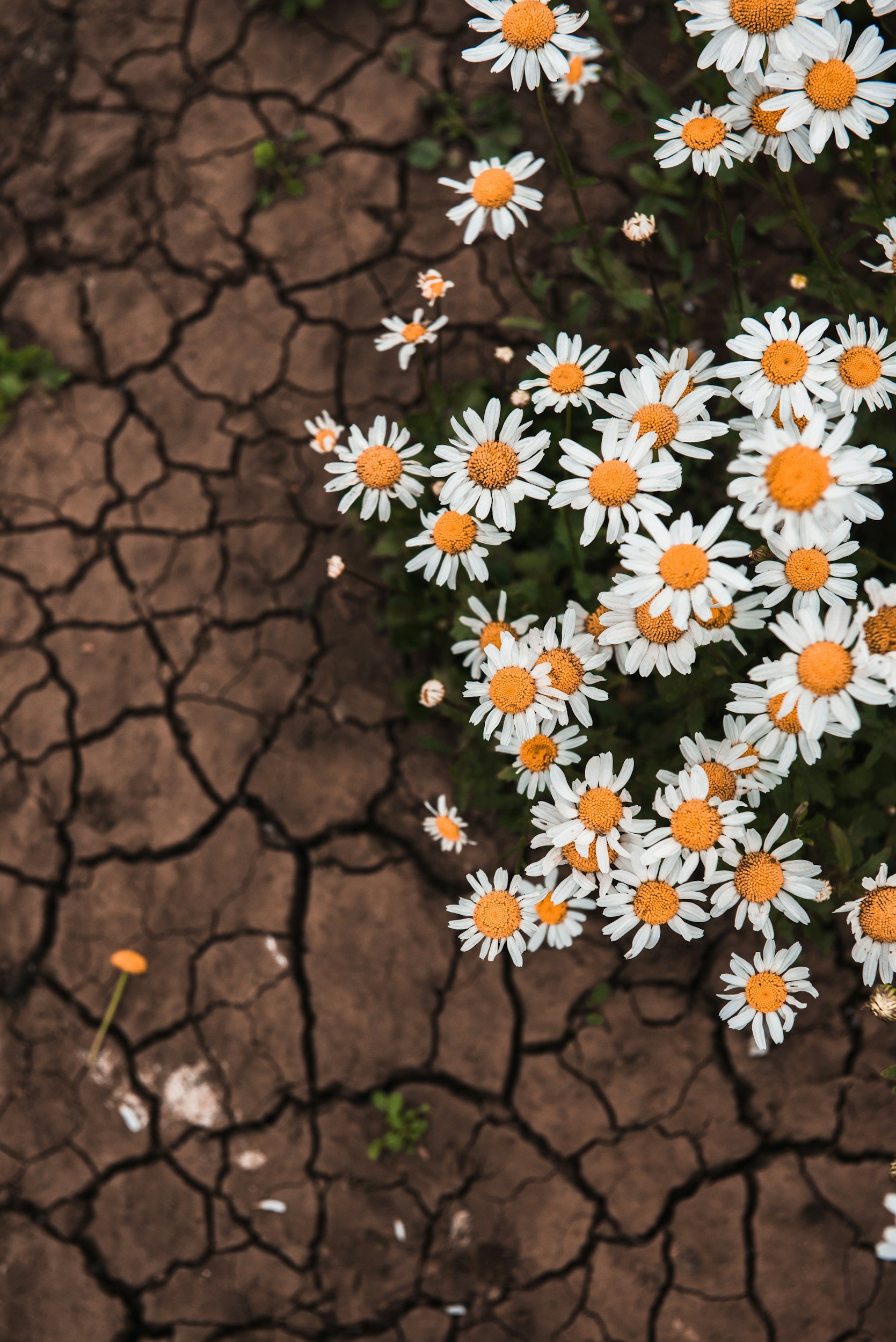
Prolonged periods of hot, dry weather during spring and summer 2026 placed UK gardens and their plants under increasing pressure. Credit: Unsplash / @mamunessa
What does this blog talk about?
After repeated heatwaves and long periods without meaningful rain, many Bristol gardens are showing the strain. Lawns have browned, established plants have wilted and newly planted borders have needed far more watering than expected.
It is tempting to respond by filling our gardens with plants associated with hot, dry Mediterranean landscapes. But creating a drought-resilient garden is not as simple as choosing a few silver-leaved plants. Bristol still has wet winters, heavy downpours and many gardens with moisture-retentive clay soils. A plant that tolerates summer drought may struggle if its roots sit wet through winter.
Resilient garden design means planning for both extremes: hotter, drier summers and warmer, wetter winters. It combines careful site assessment, healthy soil, well-chosen plants, shade, layered planting and thoughtful establishment. The aim is not merely to keep plants alive, but to create a beautiful garden that can adapt, recover and continue supporting wildlife as our climate changes.
Gardens are facing a different climate
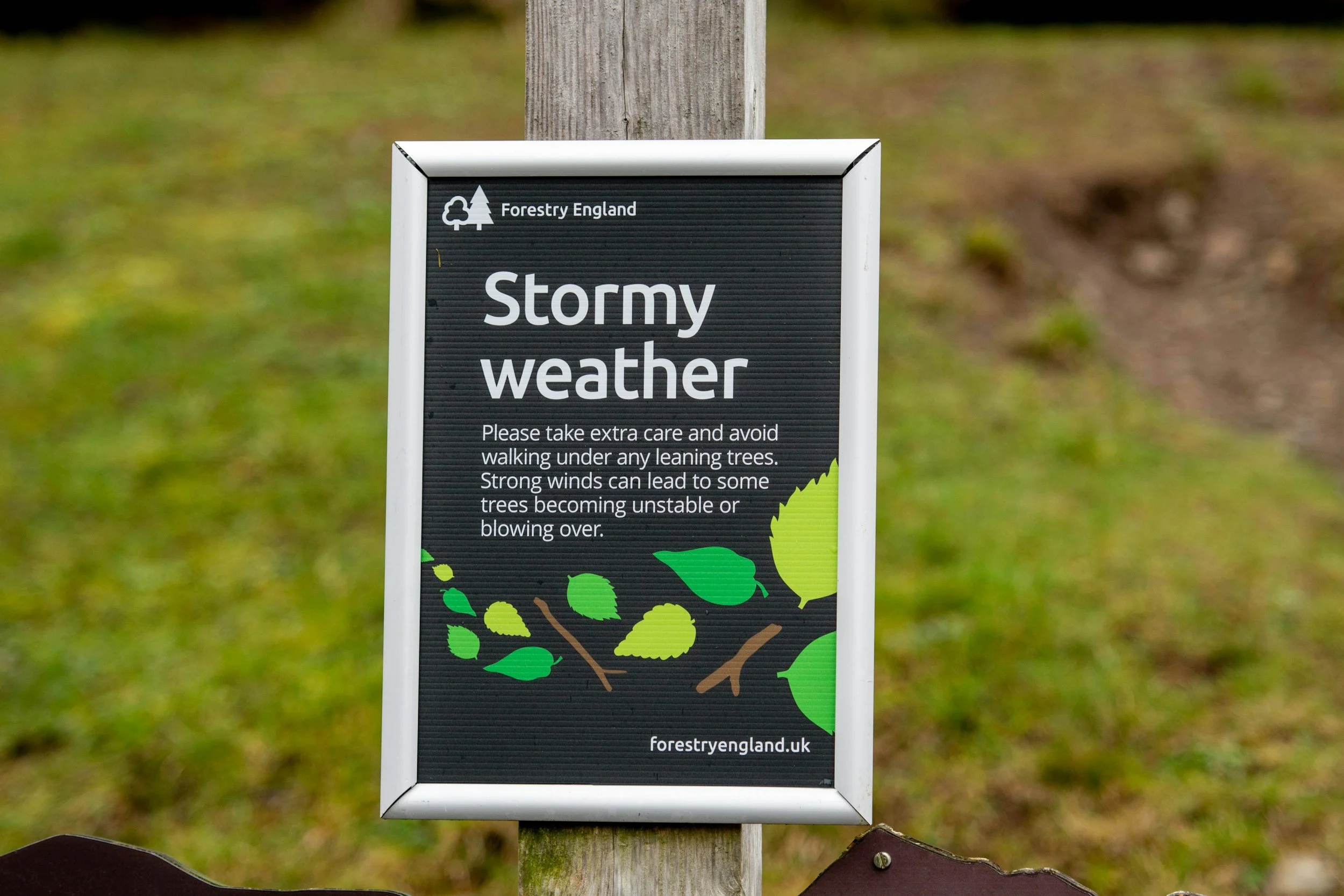
Hotter, drier summers are only part of the picture: UK gardens must also cope with wetter winters, intense rainfall and other weather extremes. Credit: Unsplash / Richard Bell
The UK’s climate has always been variable, but measured trends show that it is changing. The Met Office reports that 2025 was the UK’s warmest year since records began in 1884, while all ten of the warmest years have occurred within the last two decades. Rainfall is changing too: the winter half-year during 2016–2025 was 13% wetter than the 1961–1990 average, and very wet winter months occurred about twice as often [1]. Climate projections point in the same direction, towards hotter, drier summers, warmer, wetter winters and more frequent extremes of weather [2].
For Bristol and the surrounding area, this does not mean that every summer will be dry or every winter waterlogged. It means a greater likelihood of prolonged dry spells, extreme heat and intense rainfall, sometimes within the same year, rather than a gentle and reliable supply of water.
Urban gardens experience additional pressures through the urban heat island effect, where built-up areas become warmer than the surrounding countryside. Dark roofs, walls and paving absorb and store solar energy, while reduced vegetation means less cooling from shade and evapotranspiration. Research led by the University of Bristol identifies this as a particular challenge for towns and cities [3]. At garden scale, a paved courtyard or border beside a south-facing wall can therefore be considerably hotter and drier than a shaded boundary only a few metres away. Compacted soil and impermeable surfaces can make matters worse by preventing rain from soaking into the ground.
This is why resilient planting begins with the place, not the plant label.
Look beyond “drought tolerant”
“Drought tolerant” is a useful description, but it can also be misleading. It usually applies once a plant is established and does not mean that the plant never needs water. Newly planted trees, shrubs and perennials need consistent watering while they develop roots beyond the original potting compost. The RHS advises that a newly planted tree will typically need four to six 9-litre watering cans each week during dry weather, which equates to approximately 36–54 litres, throughout its first two years [4]. Soil type, weather and tree size will affect the actual requirement, but this illustrates why establishment needs to be planned rather than left to occasional rainfall.
Plants must also suit the complete set of garden conditions: soil type, drainage, aspect, exposure, winter temperatures and available space. Lavender may thrive in free-draining soil and full sun, but struggle in heavy ground that remains wet in winter. Conversely, a plant that copes well with clay may still suffer if it is placed beside heat-reflecting paving without enough water during establishment.
Mediterranean plants can be valuable, but they are only one part of the answer. Drought-adapted plants occur in many regions, and some British native plants are well suited to sunny, free-draining sites. Common yarrow (Achillea millefolium) remains green through remarkably hot summers once established; field scabious (Knautia arvensis) thrives in sunny, well-drained soil; and wild marjoram (Origanum vulgare) suits well-drained, often alkaline ground [5–7]. All offer flowers useful to insects, but none is suitable for every Bristol garden - field scabious and wild marjoram, for example, will not solve a winter-waterlogging problem. The best planting palette will be diverse and matched to the particular site rather than copied from a generic list.
Design the garden to manage water
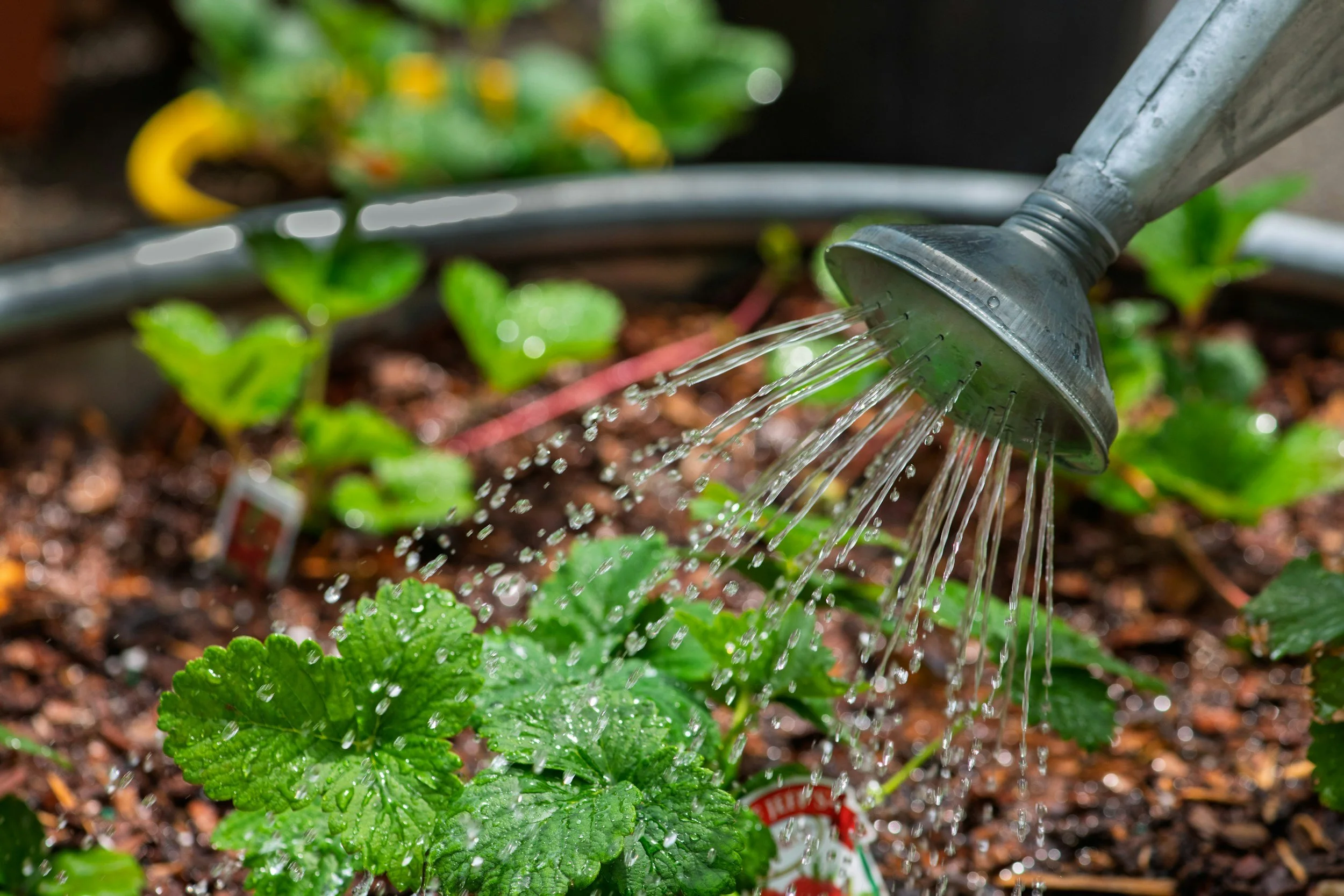
Water newly planted trees, shrubs and perennials thoroughly at their roots during dry weather, rather than watering little and often. Credit: Unsplash / Benjamin White
A drought-resilient garden should make better use of the rain that does fall. Large areas of impermeable paving send water towards drains instead of allowing it to replenish the soil. Where appropriate, permeable surfaces, planted areas and rain gardens can slow the flow and help water soak into the ground [8].
Soil protection matters too. A suitable organic mulch can reduce evaporation, moderate soil temperature and improve soil structure over time. Dense planting and ground-cover plants shade the soil, reducing the amount of bare ground exposed to sun and wind. The aim is not to add large quantities of organic matter indiscriminately, but to understand the existing soil and improve it appropriately [8].
Watering technique also makes a difference. A thorough watering that reaches the root zone is generally more useful than frequent light sprinkling, which encourages roots to remain near the surface. A watering bag can release water slowly around a newly planted tree, while a simple soil check helps avoid watering ground that remains damp below the surface. Water should be directed towards plants that genuinely need it, especially new planting, rather than used to keep established lawns green during dry weather [4,8].
Create shade and plant in layers
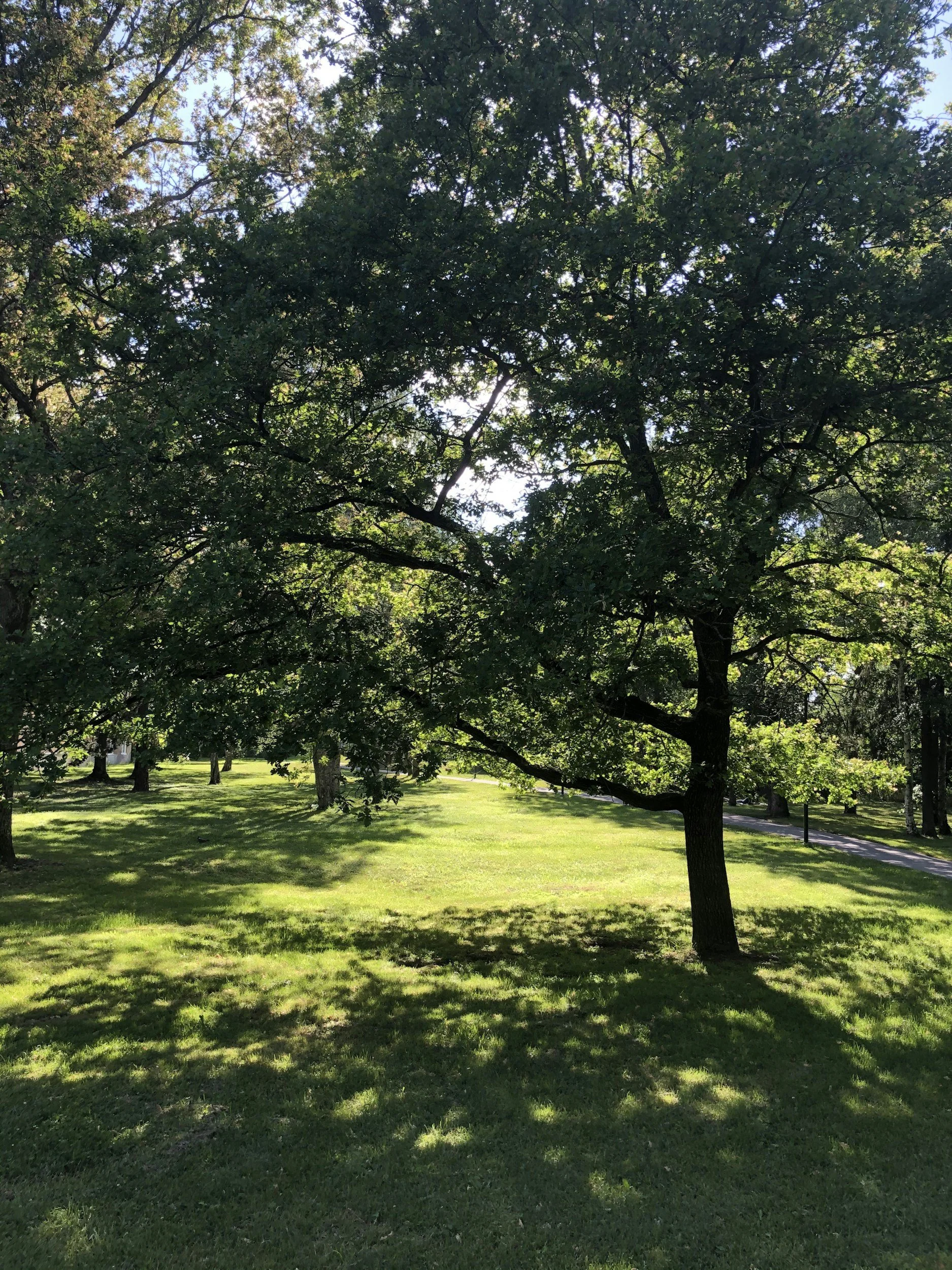
Trees provide valuable shade, cool the air and reduce the heat absorbed by hard surfaces and soil. Credit: Unsplash / Linn Lindström
Trees are among the most valuable pieces of climate infrastructure we can include in a garden. Their canopies provide shade, cool the air through water loss from their leaves and reduce the heat absorbed by walls, paving and soil. Shrubs and climbers can provide further shade and shelter at lower levels [9].
Trees also require particularly careful forward planning. A tree planted now may still be growing decades from today, under conditions different from those in which it was selected. Mature size, root space, soil, drainage and future climate suitability all need consideration. Choosing only for today’s conditions risks investing years in a tree that may struggle as the site changes.
This does not mean trying to predict one perfect “future-proof” species. No plant is immune to every combination of drought, waterlogging, heat, frost, pests and disease. A better approach is to choose well-suited trees from a considered range, avoid relying too heavily on one species and provide the conditions they need to establish strongly.
Beneath the tree canopy, layered planting can include shrubs, climbers, perennials, grasses, bulbs and ground cover. This principle also sits at the heart of forest gardening, which takes inspiration from the layered structure of young woodland and woodland edge. In a full forest garden, the layers are often productive and may include fruit or nut trees, soft-fruit shrubs, perennial vegetables, herbs, climbers and ground-cover crops [10].
A small urban garden does not need to become a forest garden to benefit from this thinking. Its most useful principles include covering and protecting the soil, using vertical space, combining plants with complementary structures and functions, and creating several layers of habitat. Care is still needed: too much canopy in a small plot can compete for water and cast dense shade, so the approach must be scaled to the site. Used thoughtfully, layered planting can moderate conditions around the soil, provide different sources of food and shelter for wildlife and spread risk when unusual weather causes one plant to struggle.
Plan for a changing ecology, not just changing weather
Climate change affects more than the appearance of our gardens. Plants sit at the base of garden food webs, supporting insects and the birds and other animals that depend on them.
A 2026 study led by Rob Cooke and published in Nature Communications modelled possible futures for 1,002 plant, 56 butterfly and 219 bird species across Great Britain. The researchers projected extensive reorganisation of biological communities under all scenarios, with existing bioclimates disappearing and novel ones emerging. Plants showed particularly severe responses to environmental change [11].
This research does not tell us which ornamental plants to buy for a Bristol border. It does, however, underline that the ecological relationships familiar to us are unlikely to remain static. For garden design, a reasonable response is to create varied, connected and structurally diverse planting that gives wildlife more opportunities to feed, shelter and move through the landscape.
Native plants remain important, particularly where insects have specialist relationships with them. Adult butterflies may visit many flowers for nectar, but their caterpillars can be much more selective. Brimstone caterpillars feed on buckthorn (Rhamnus cathartica) and alder buckthorn (Frangula alnus) [12], while orange-tip caterpillars use plants in the cabbage family, especially cuckooflower (Cardamine pratensis) and garlic mustard (Alliaria petiolata) [13]. That relationship cannot be replaced simply by adding more nectar-rich flowers.
Native status should not, however, be the only test. Site suitability, flowering period, larval food value, plant behaviour and resilience all matter. Buckthorn prefers calcareous ground while alder buckthorn is associated with moist, acidic soils [12]: even a valuable larval food plant must be put in the right place. A thoughtfully designed mixture of suitable native and non-native plants can extend seasonal resources while avoiding invasive species and plants likely to fail in future conditions.
Final Thoughts: Resilience begins at the design stage
A resilient garden is not defined by a particular style. It can be contemporary, cottage-inspired, formal or relaxed. What matters is how it works.
Before choosing plants, consider where heat accumulates, where rain travels, which areas remain wet in winter and how much shade the garden has now and may need in future. Retain useful established plants where possible, give new plants enough space and choose a diverse palette suited to both the soil and the changing climate.
The result should not be a garden that merely survives the next heatwave. It should remain beautiful, adaptable and full of life: a garden rooted in its local conditions but also designed with the future in mind.
If you are planning a new garden or rethinking planting that is struggling with heat, drought or difficult site conditions, Gardens by Gemma offers garden design and planting-design services across Bristol, Bath and North Somerset. Get in touch to discuss a garden designed for beauty, resilience and wildlife.
References:
1. Met Office (2026) ‘State of the UK Climate’. Available at: https://www.metoffice.gov.uk/research/climate/maps-and-data/about/state-of-climate (Accessed: 13 August 2026).
2. Met Office (n.d.) ‘What is climate change?’. Available at: https://weather.metoffice.gov.uk/climate-change/what-is-climate-change (Accessed: 13 August 2026).
3. University of Bristol (2023) ‘TRUUD heat research’. Available at: https://www.bristol.ac.uk/news/2023/december/truud-heat-research.html (Accessed: 13 August 2026).
4. Royal Horticultural Society (n.d.) ‘How to grow trees’. Available at: https://www.rhs.org.uk/plants/types/trees/growing-guide (Accessed: 13 August 2026).
5. Royal Horticultural Society (n.d.) ‘Achillea’. Available at: https://www.rhs.org.uk/plants/achillea (Accessed: 13 August 2026).
6. Royal Horticultural Society (n.d.) ‘Knautia arvensis’. Available at: https://www.rhs.org.uk/plants/9742/knautia-arvensis/details (Accessed: 13 August 2026).
7. Royal Horticultural Society (n.d.) ‘Origanum vulgare’. Available at: https://www.rhs.org.uk/plants/11923/origanum-vulgare/details (Accessed: 13 August 2026).
8. Royal Horticultural Society (n.d.) ‘Drought-resistant gardening’. Available at: https://www.rhs.org.uk/garden-design/drought-resistant-gardening (Accessed: 13 August 2026).
9. Royal Horticultural Society (n.d.) ‘Gardening in a changing climate’. Available at: https://www.rhs.org.uk/science/gardening-in-a-changing-world/climate-change (Accessed: 13 August 2026).
10. Permaculture Association (n.d.) ‘The 10-year Forest Garden Trial’. Available at: https://www.permaculture.org.uk/research/forest-garden-research (Accessed: 13 August 2026).
11. Cooke, R., Burton, V.J., Brown, C. et al. (2026) ‘Future scenarios for British biodiversity under climate and land-use change’, *Nature Communications*, 17, 2704. Available at: https://doi.org/10.1038/s41467-026-70064-4.
12. Butterfly Conservation (n.d.) ‘Brimstone’. Available at: https://butterfly-conservation.org/butterflies/brimstone (Accessed: 13 August 2026).
13. Butterfly Conservation (n.d.) ‘Orange-tip’. Available at: https://butterfly-conservation.org/butterflies/orange-tip (Accessed: 13 August 2026).